New diagnosis: first steps
A diagnosis of Phelan-McDermid Syndrome can feel overwhelming. You do not have to do everything at once. Here are the first steps other families have found useful, and where to find trusted advice.
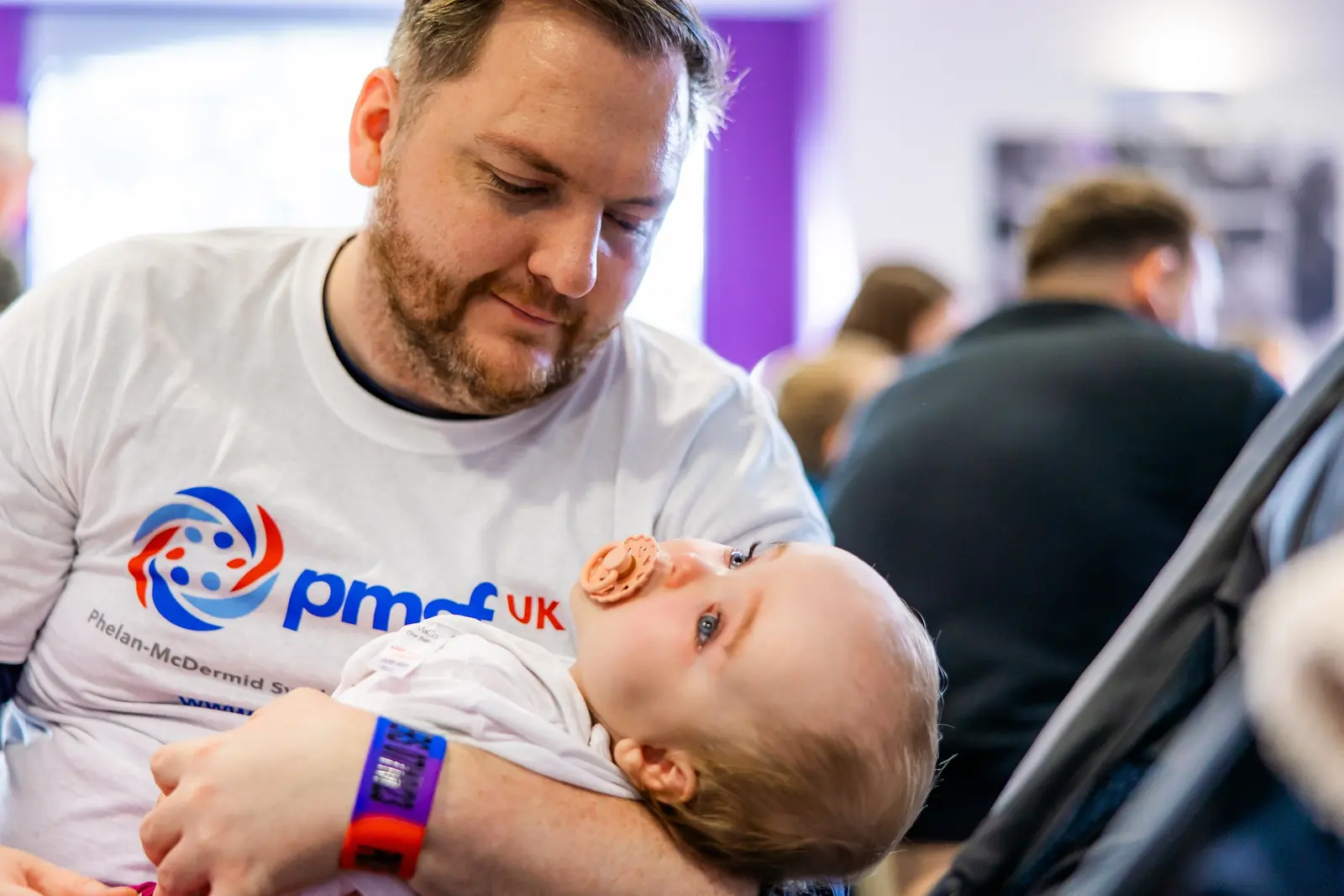
It takes time to understand what the diagnosis means for your family, and coming to terms with it can be very emotional. Forms, assessments and appointments can pile up. Take it one step at a time, and ask for help.
We do not give legal, financial or medical advice ourselves. We point you to the official and specialist organisations that do.
1. Join PMSF and PMSF UK
One form registers you with both the international Phelan-McDermid Syndrome Foundation and with us. Once it has been received, your regional rep will welcome you and can put you in touch with families near you.
New families also receive a welcome letter, and a letter to give to your GP or paediatrician about the issues that can come with PMS and the checks that may be needed.
2. Talk to other families
Our closed Facebook group is a private place to ask questions and share experiences with families who understand.
- PMSF UK & Ireland Facebook family support group (external website)
- International PMS Facebook family support group (external website)
It can also help to join local disability groups and parent carer forums near you.
3. Benefits and money
Disability Living Allowance (DLA) for children is a tax-free benefit to help with the extra costs of being disabled. It is based on the needs that come from a disability, not the disability itself, and has two parts: care and mobility. Adults and young people aged 16 and over may need Personal Independence Payment (PIP) instead. The rules are different in each nation:
- England and Wales: DLA for children on GOV.UK (external website) and PIP on GOV.UK (external website)
- Scotland: Child Disability Payment on mygov.scot (external website)
- Northern Ireland: DLA for children on nidirect (external website)
- Republic of Ireland: Disability Allowance on Citizens Information (external website)
Charities such as Contact (external website) and KIDS (external website) can help you fill in the forms, and Turn2us (external website) lets you search thousands of UK charities that offer grants.
4. Education: EHC plans
In England, an Education, Health and Care (EHC) plan is a legal document. It describes a child or young person's special educational, health and social care needs, the extra help they will get, and how that help will support them.
- Special educational needs and EHC plans on GOV.UK (external website)
- What is an EHC plan? (Contact) (external website)
- IPSEA (external website): free, legally based advice on special educational needs and disability in England
Scotland, Wales and Northern Ireland have their own systems. In Scotland, Enquire (external website) explains additional support for learning. Elsewhere, Contact (external website) can point you to the right information.
5. Help at home and short breaks
Every parent of a disabled child can ask for an assessment by social services. In Scotland this is the Social Work Department, and in Northern Ireland the Health and Social Care Trust. Your paediatrician, your child's school or your GP can refer you, or you can refer yourself.
Every council also publishes a "Local Offer" of services for disabled children and children with special educational needs, such as parent-led groups, short breaks, holiday play schemes and after-school clubs.
- Find your local council on GOV.UK (external website)
- Social care and support guide on the NHS website (external website)
6. Getting around
- Blue Badge parking scheme on GOV.UK (external website)
- Motability Scheme (external website): check on its website whether you are eligible
7. Help research
Registering with the international PMS DataHub helps researchers understand PMS. It is separate from joining PMSF. Find out about the DataHub.